Table of Contents
Solar Micro-Grid Systems in Pakistan – The Future of Reliable, Off-Grid Power
Why Pakistan Needs Solar Micro-Grids
For decades, Pakistan has depended on large centralized power grids to meet electricity demands. Yet millions still face unreliable or non-existent electricity access, especially in rural and remote areas. With population and economic growth accelerating, electricity demand is projected to rise 35.8% by 2050 (Population Council, NIPS, UN).
Globally, falling costs of decentralized renewable energy have made solar micro-grids a preferred solution. Over 2,258 micro-grid projects operate worldwide, powering industries, commercial facilities, and communities more reliably and cost-effectively than traditional grids.
In Pakistan, the National Electric Power Regulatory Authority (NEPRA) has launched micro-grid initiatives to combat load-shedding and lower consumer costs. However, wider adoption—especially in rural electrification and industrial power supply—is essential. At Paksolar Renewable Energy, we are expanding into solar-powered micro-grid solutions to deliver clean, stable, and affordable energy across the country.
What is Micro-grid?
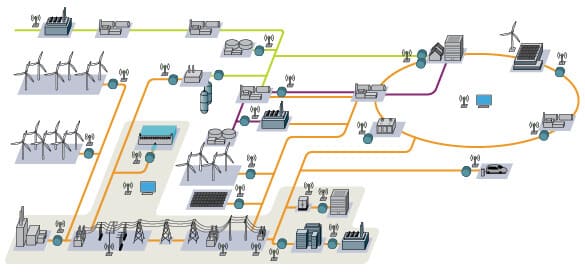
A micro-grid is a localized electricity network that generates and distributes power within a defined area. It can operate independently (off-grid) or work in parallel with the national grid. Most micro-grids use renewable energy sources such as solar, wind, hydro, or biogas—providing clean, sustainable electricity.
Micro-grids are a game-changer for off-grid communities, ensuring 24/7 power for homes, businesses, and industries, while reducing dependence on fossil fuels.
Types of Localized Grids
PICOGRID
Ultra-small systems for low energy needs, common in rural areas where full Solar Home Systems (SHS) are unaffordable. Often powers lights, fans, or small appliances.
NANOGRIDS
Slightly larger systems, usually a single-home solar setup with a PV panel, battery, and pay-as-you-go meter—meeting basic household electricity needs.
MICROGRID
A full-scale local energy network using multiple distributed energy resources (DERs) such as solar PV, wind turbines, biogas plants, fuel cells, and energy storage systems.